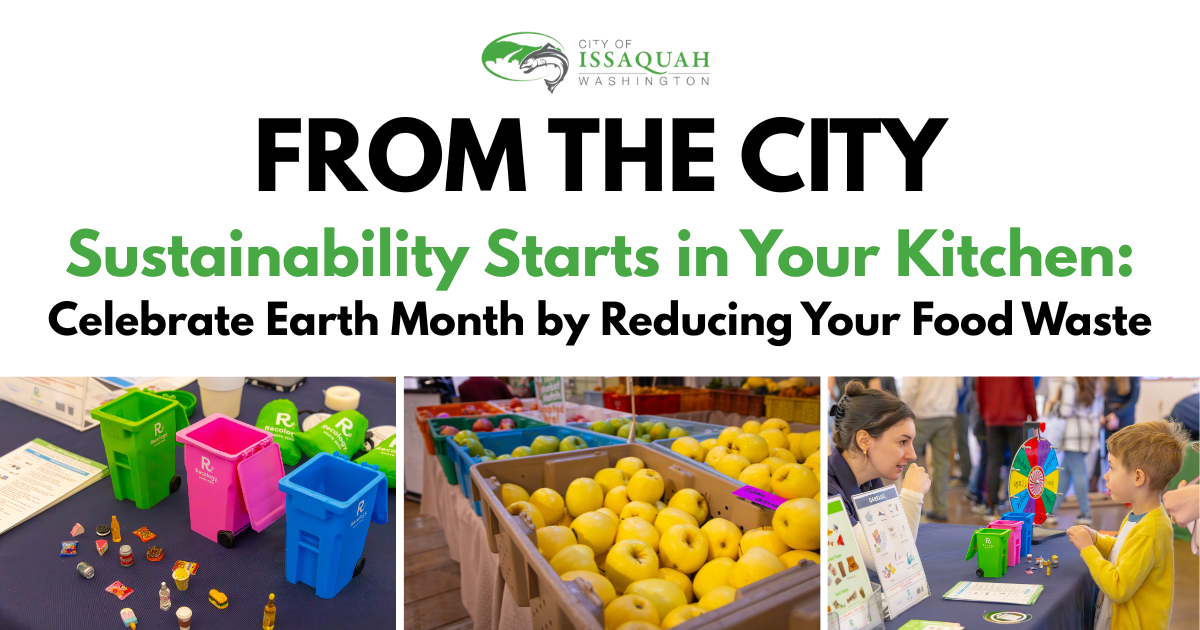
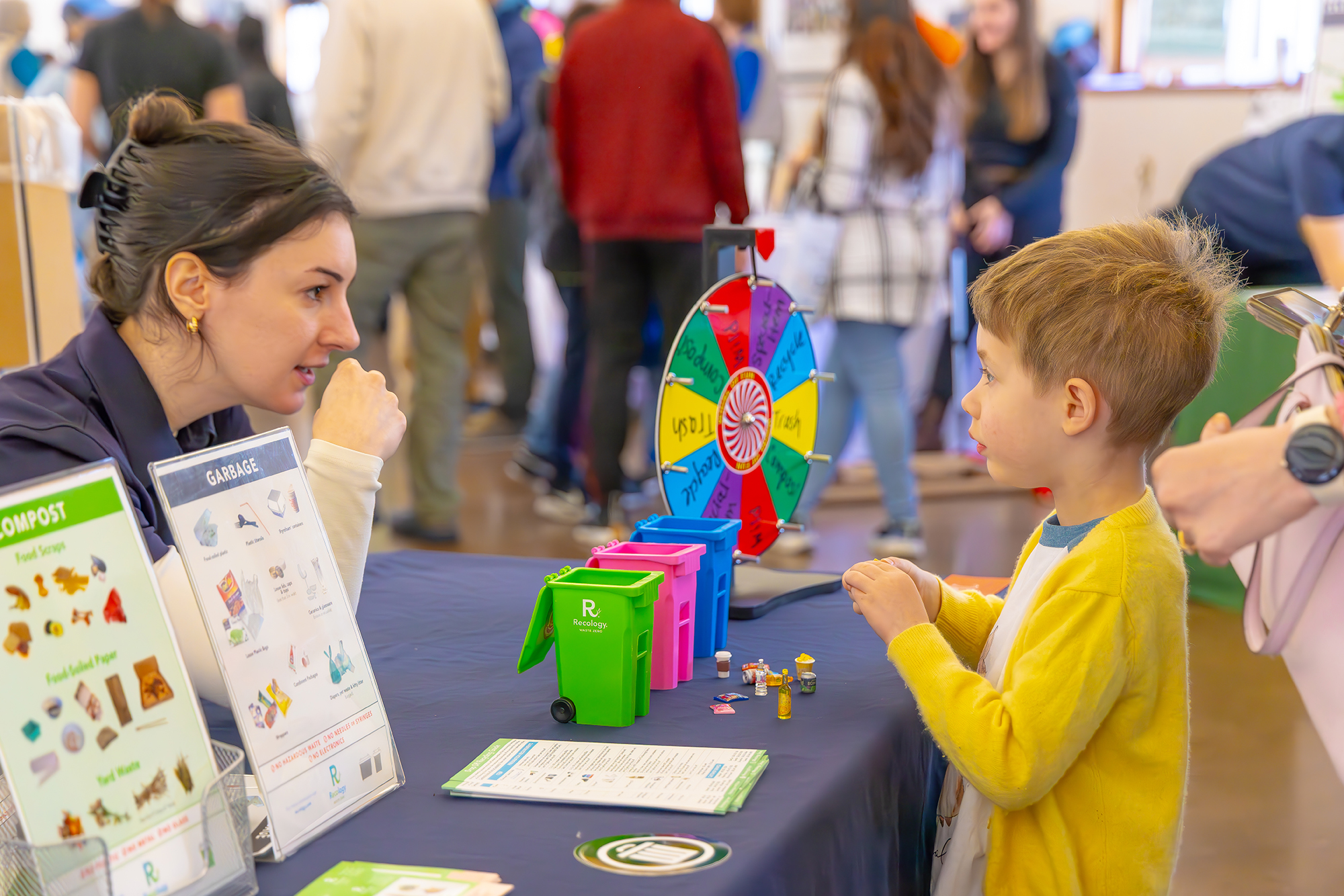
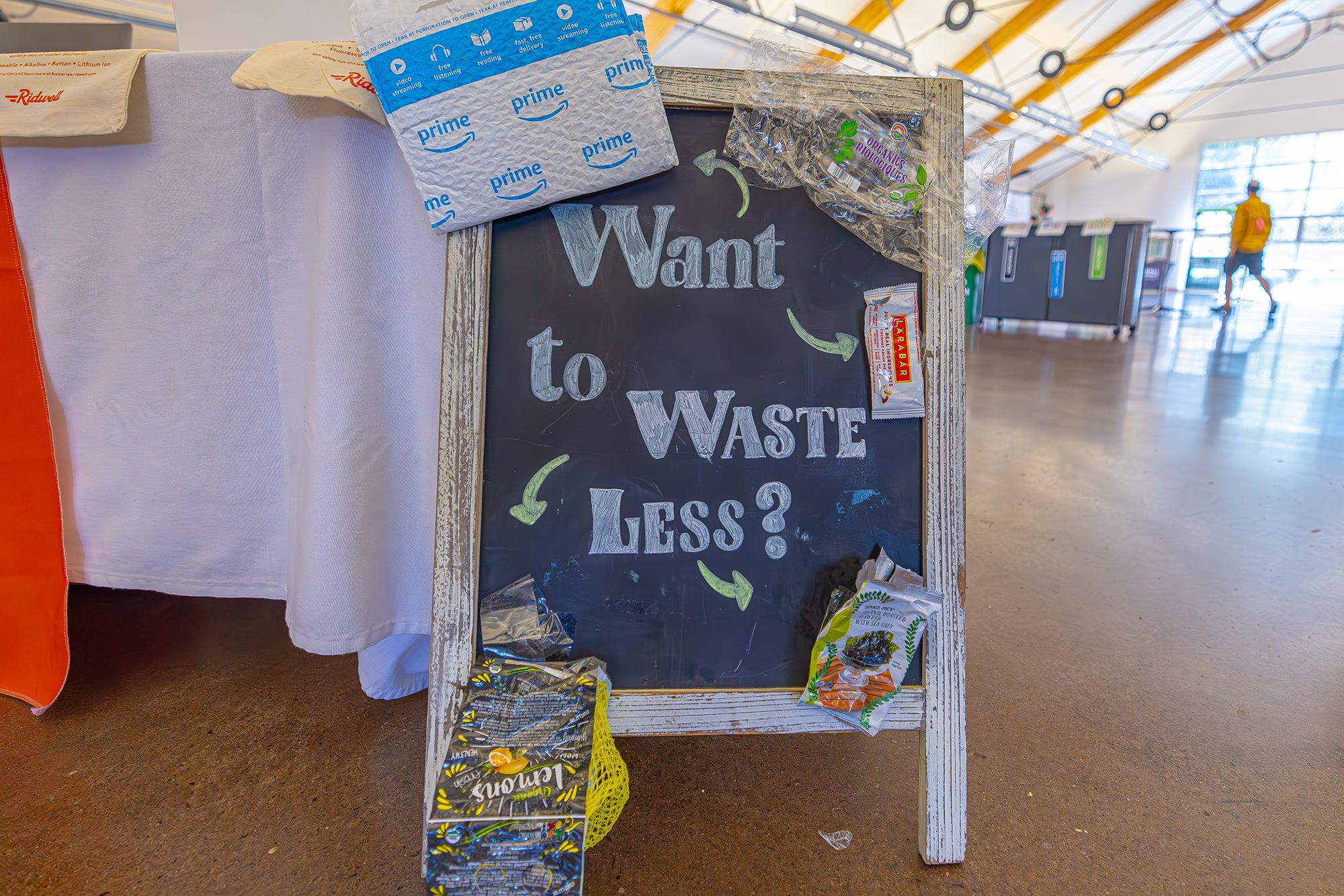
As we celebrate Earth Month, be sure to stop by the Sustainability Fair at Pickering Barn on April 26! Photo by City of Issaquah.
April is celebrated globally as Earth Month, offering communities a chance to recommit to protecting our planet. During this month, the city offers a number of events and campaigns—you can view them all at issaquahwa.gov/earthmonth —but perhaps none more popular than the third annual Sustainability Fair, which will take place at Pickering Barn on April 26.
This year, we want to draw special attention to food waste reduction efforts.
In 2021, Washington generated more than 1 million tons of food waste. Discarding food depletes the resources used to grow, harvest and transport it, contributing to environmental damage, economic loss and food insecurity. Thankfully, many in Issaquah are taking meaningful steps to address this issue.
Reducing Food Waste at Home
Residents play a vital role in preventing food waste. The city has a goal to divert 70% of its waste away from the landfill by 2033 and 90% by 2050.
“Reducing household food waste is one of the easiest ways to protect the environment and save money,” said Issaquah’s Solid Waste Program Analyst Sam Tarvin.
Here are simple steps residents can take:
- Pick up a free compost bin at the Recology store. Compost service is free for residents.
- Make a grocery list to avoid buying unnecessary items.
- Consider bulk bin items to reduce plastic waste for individual products.
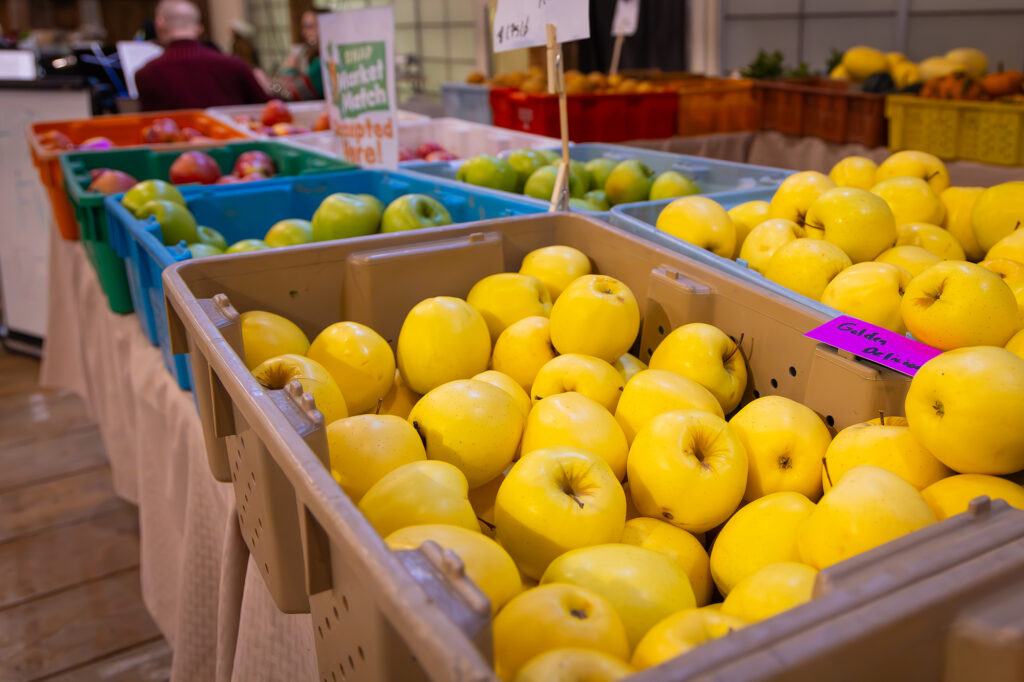
- Buy “imperfect” produce, which is often discarded despite being perfectly edible.
- Freeze extra bread, produce and meat for later use.
- Make vegetable broth from vegetable scraps.
- Teach kids to bring home uneaten food from packed lunches so you can track their preferences.
- Learn what food labels mean (e.g., “use by,” “sell by,” “best by”). King County has resources to help.
Reducing Food Waste in Schools
Since March 2024, all Issaquah public schools have implemented waste sorting at lunch, supported by student-led green teams. These teams help peers properly sort waste and compost. Grand Ridge Elementary in particular has led outstanding efforts to combat waste and improper disposal. Schools have also replaced plastic utensils with compostable or reusable options.
The effort began in 2016 with the introduction of share tables in partnership with King County Health. Students could leave unwanted fruits, veggies and packaged items for others. Any items remaining that could be donated were taken to the Issaquah Food and Clothing Bank. While the program was paused during the pandemic, elementary schools are starting to reintroduce it.
Brian Olson, Issaquah School District’s food services director, adjusted his approach to reduce waste by using past consumption data to prepare meal quantities more accurately. Combined with waste sorting and green team initiatives, these changes have diverted nearly 15 tons of recycling and 33 tons of compostable material away from landfills.
 Reducing Food Waste in Businesses
Issaquah is also helping businesses cut food waste. Local business leaders are exploring options like compostable serviceware ordinances and food donation programs. The city is collaborating with the University of Washington’s Evans School of Public Policy to create a commercial food waste reduction playbook. This resource will help businesses prevent waste, divert compostable material from landfills and rescue edible food for those in need.
National Food Waste Prevention Week
From April 7–13, Issaquah will celebrate National Food Waste Prevention Week with educational events showcasing home food waste reduction methods. These events will include partnerships with local organizations. It’s the perfect time for you to talk with your family about your personal goals for food waste prevention.
Even beyond April, Issaquah’s community—from elementary school students to business owners—continues to make a positive impact by cutting back on food waste and building a more sustainable future.
Stacy McKinstry is the City of Issaquah sustainability manager. Windley Knowlton is a Civic Spark fellow with the city.
As published in the spring 2025 issue of Community Connect magazine >>>