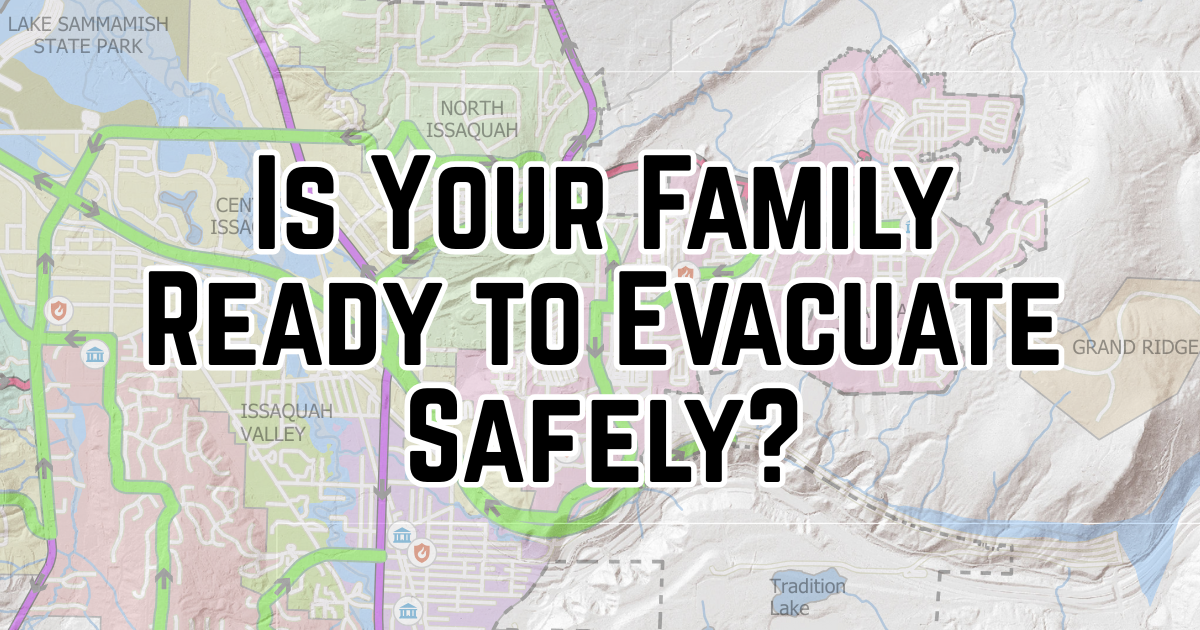
You just learned that you need to evacuate from a wildfire. What do you grab? What’s your plan?
The tragic Los Angeles wildfires earlier this year claimed the lives of 29 people and thousands of structures. Events like this may have you wondering what you can do to prepare your family for wildfire.
Summers are getting hotter and drier in the historically “too-wet-to-burn” Pacific Northwest. Under the right climatic conditions, Issaquah could experience an impactful wildfire. We have two types of wildfire scenarios
in Issaquah.
The first are smaller, localized fires that can occur in a variety of conditions. These fires are kept small by response efforts and may tend to smolder for some time due to wet undergrowth and challenging conditions like steep elevations that impede access by firefighters.
The other fire scenario, large and fast-moving, requires the right blend of climatic scenarios—dry fuels and strong east winds that bring low humidity. Wind, in particular, is a critical factor that turns a routine wildfire into a fast-moving, destructive and deadly event. The 2017 Tubbs Fire, 2018 Camp Fire and 2023 Maui Wildfire were all characterized by high winds.
Wildfires may necessitate evacuations to protect you and your family. This year, Issaquah completed a wildfire evacuation study estimating how long it would take 90% of residents to evacuate each neighborhood. The table below shows midday summer estimates.
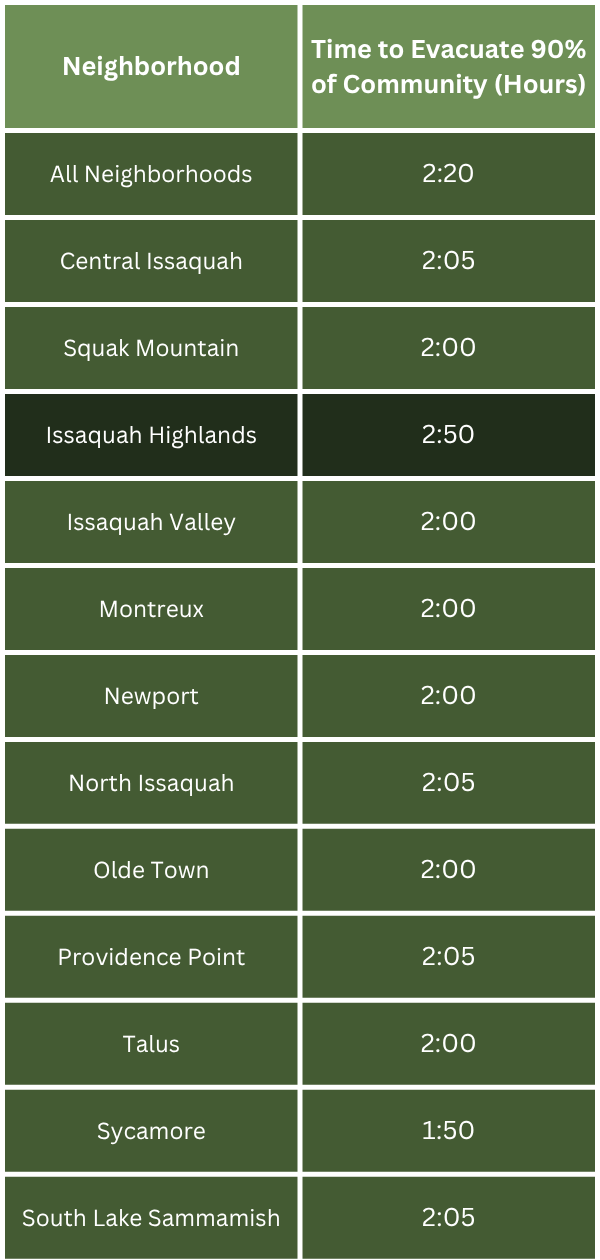 In an evacuation, the quicker you can leave, the better. Through surveying the community, we learned that the average resident believes they would need 40 minutes from getting notice to being ready to leave. The more you can have prepared for a potential disaster, the faster you can evacuate.
If you’re feeling overwhelmed by this information, there are several things that you can do to prepare yourself, your family and your community.
- Sign up for emergency alerts at issaquahwa.gov/alert to ensure you are notified of a wildfire.
- Build a “Go Kit” with the absolute essentials if you need to leave immediately, such as water, snacks, eye protection, masks, flash drive with important documents, medications, etc. Go to issaquahwa.gov/BuildKit for a full list of items.
- Determine an alternate meeting location for your family well outside the area of concern, such as an urbanized area of Bellevue or Seattle (a friend’s house, public parks, etc.).
- Get to know if you have a neighbor with mobility challenges and learn their plan.
- Know your evacuation routes.
Beyond preparing for an evacuation, home hardening is an important protective action that you can take to reduce the risk of a wildfire impacting your home. Eastside Fire and Rescue has personalized home wildfire assessments if you are interested in learning about specific actions you can take at your property to reduce risk. Go to eastsidefire-rescue.org/329 for more information.
Finally, if you want to know more about the wildfire evacuation study and how the city is preparing for wildfires, go to issaquahwa.gov/evacuation-study.
Wildfires are a challenging reality of our region, but together we can take action to reduce our risk. If you have questions, please reach out to me at EM@issaquahwa.gov.
Jared Schneider is the City of Issaquah emergency manager.
As published in the fall 2025 issue of Community Connect magazine >>>