We’ve all seen the shocking images—floating garbage patches in the Pacific Ocean, marine animals entangled in plastic waste and birds feeding bottle caps to their chicks. While these scenes can feel distant or overwhelming, the truth is that plastic pollution is both a global crisis and a local issue. The good news? Each of us has the power to make a difference.
Plastic Free July is a worldwide initiative that inspires millions to reduce single-use plastics. Throughout the month, the City of Issaquah has been sharing practical tips, highlighting local programs and inviting our community to take small but impactful steps to curb plastic waste.
The Problem with Plastic
Plastic makes up an estimated 15% of King County’s garbage, and less than 20% of that plastic is successfully recycled. Most of it is single-use—plastic bags, straws, wrappers and containers—designed for convenience, not longevity. Once discarded, these materials often become litter or end up in landfills, where they take hundreds of years to break down into harmful microplastics that persist in our ecosystems.
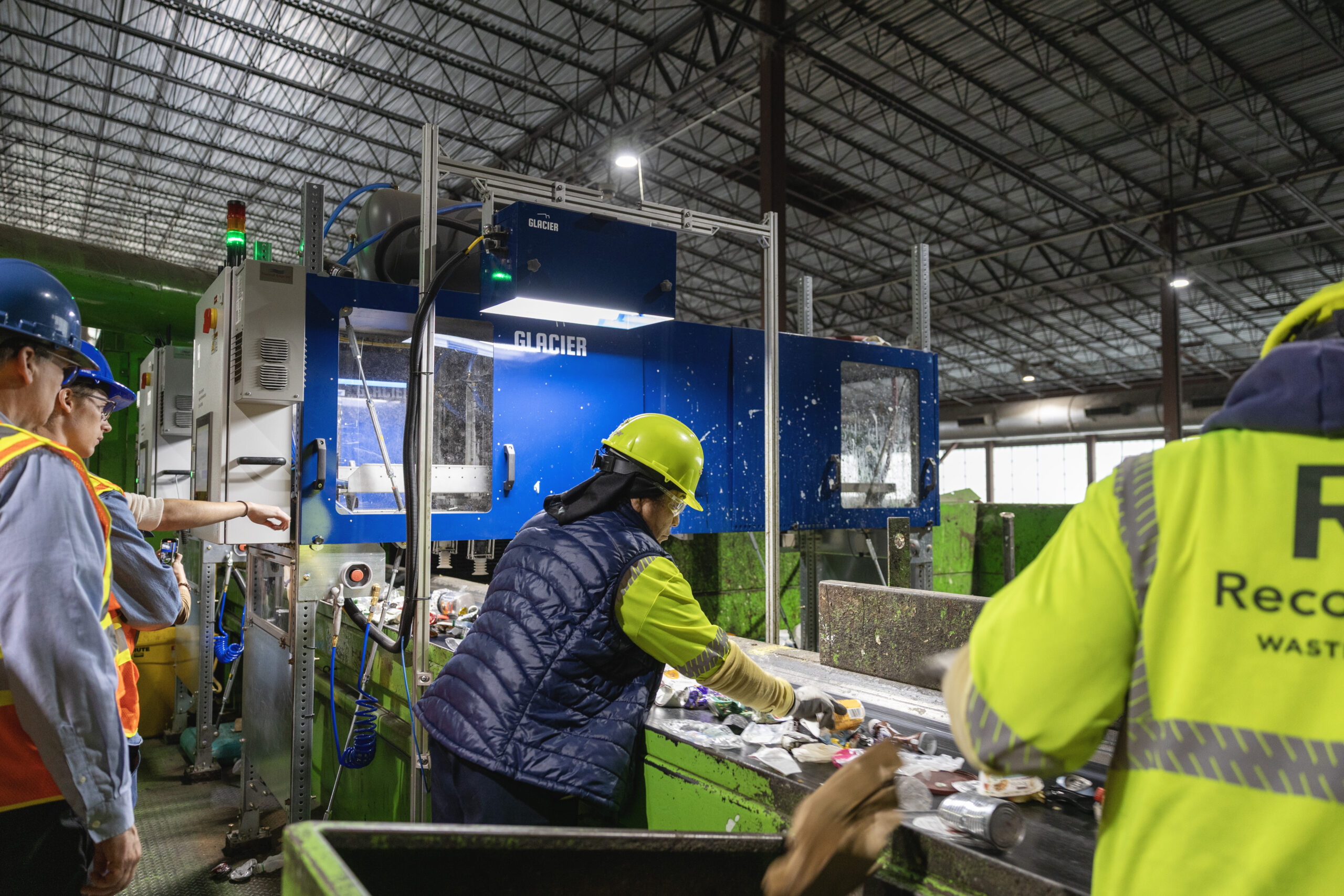
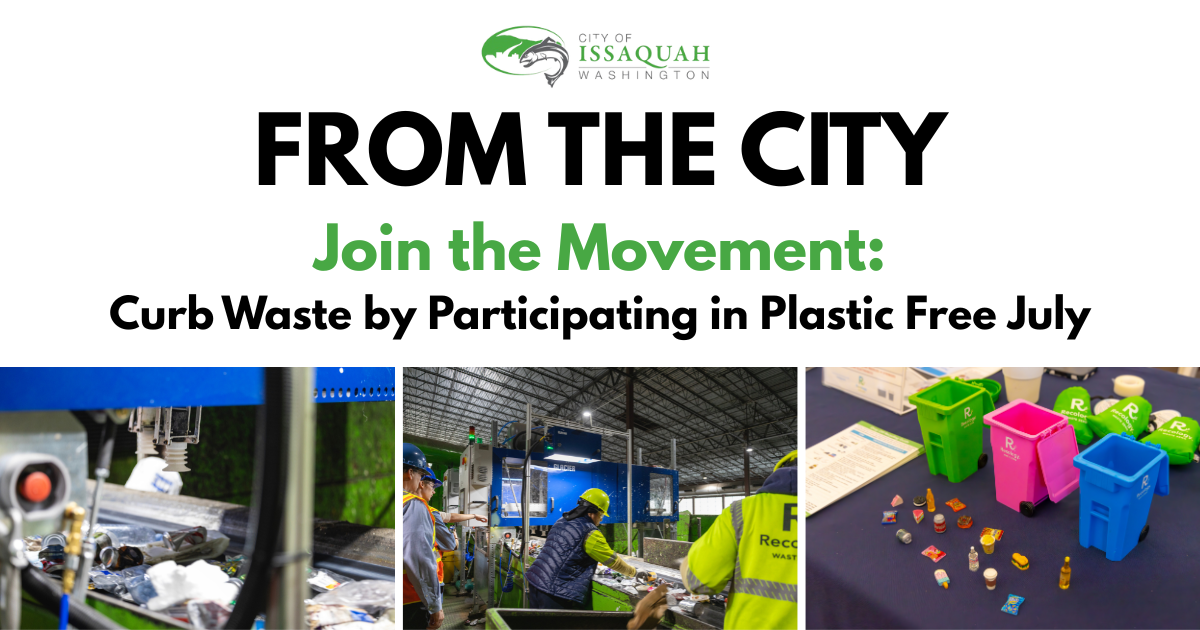
Recology King County is working to better identify and recover plastic from the recycling stream at its Material Recovery Facility in Seattle. Photo by City of Issaquah.
Simple Swaps for Everyday Impact
Reducing your plastic footprint doesn’t have to be daunting. Here are a few easy changes you can make in your daily routine:
- Bring a reusable water bottle—Stay hydrated without the waste.
- Use a reusable coffee cup—Many cafes welcome them, and it adds a personal touch to your order.
- Keep reusable shopping bags in your car—Never be caught without one again.
- Switch to bar soap—Skip the plastic bottle entirely.
- Opt for reusable straws—Metal or glass options are both more sustainable than single use plastic versions.
- Replace plastic produce bags—Pack a fabric or mesh bag for produce in your shopping bag. You can even make your own from old clothes.
- Buy in bulk—Less packaging, less waste.
- Store snacks in silicone bags—Ditch single-use sandwich bags.
- Reuse glass jars—Great for storage, decor or even as drinkware.
And remember: when you do use plastic, make sure it’s empty, clean and dry before tossing it into your blue recycling bin. Our local waste hauler, Recology King County, has recently introduced AI robotics at their Material Recovery Facility (MRF) to better identify and recover plastic from the recycling stream—part of an ongoing commitment to divert more waste from landfills.
Policy in Action: Reducing Plastic Through Legislation
Legislation plays a crucial role in reducing plastic pollution. Here’s a look at some key initiatives in Washington State and right here in Issaquah:
- Issaquah’s Recyclable and Compostable Serviceware Ordinance requires food businesses to use takeout containers that can be recycled or commercially composted.
- Washington’s Single-Use Plastic Bag Ban prohibits single-use plastic bags in all retail settings.
- Statewide Styrofoam Ban ends the sale and distribution of expanded polystyrene (Styrofoam) products.
- Recycled Content Laws mandate that producers of items like beverage containers and household product packaging use increasing amounts of recycled plastic.
- The Recycling Reform Act (recently passed) established an extended producer responsibility system, designed to reduce unnecessary packaging and supporting state recycling efforts.
Start Small, Build Momentum
The key to lasting change is consistency. Choose one habit that aligns with your lifestyle and stick with it. When it becomes second nature, add another. Share your progress with neighbors, co-workers or family—together, our collective action adds up to meaningful impact.
Need ideas or feeling unsure where to start? Reach out to me at samanthat@issaquahwa.gov—I’d be happy to help you take your first step toward a plastic-free lifestyle.
Let’s work together this July—and beyond—to protect our environment, one simple swap at a time.
Sam Tarvin is the City of Issaquah solid waste program analyst.
As published in the summer 2025 issue of Community Connect magazine >>>