
As summer temperatures rise across the Pacific Northwest, preparing for extreme heat is more important than ever.
The summer of 2021 offers a recent reminder: Issaquah and surrounding communities endured an unprecedented “Heat Dome,” a blistering three-day heatwave with daytime highs up to 109°F and nighttime lows that didn’t drop below 68°F. That event claimed the lives of 112 Washingtonians and overwhelmed hospitals with heat-related emergencies. Extreme heat is the deadliest weather-related disaster in the United States.
Learning from the Heat Dome
Many residents still remember what they did to survive the 2021 heatwave—spending time on the water, rotating ice trays nonstop, hydrating like never before and desperately seeking relief with most lacking access to air conditioning.
Even our infrastructure suffered—pavement buckled along I-5, and emergency services were stretched thin.
A 2022 study by UCLA researchers Karen A. McKinnon and Isla R. Simpson classified the heat dome as a once-in-10,000-years event. While we all hope that it’s quite a while before we experience something like that again, climate projections suggest a changing reality—one that shows summers hotter and drier in the future. In fact, average summer temperatures in the region are expected to increase by 6.9°F by 2050 and 11.1°F by 2080.
Understanding Local Risks: Heat Islands in Issaquah
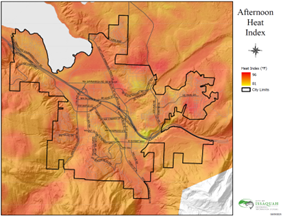
King County heat maps recognize Issaquah Highlands as a high-risk zone due to its dense development and limited vegetation.

Graphics courtesy of City of Issaquah.
To proactively look into ways to combat these rising temperatures, King County conducted a study in 2021 to identify “heat islands”—areas with significantly higher surface temperatures due to dense development and limited vegetation. Issaquah Highlands emerged as one of these high-risk zones, highlighted in red and orange on the county’s heat maps.
These findings underscore the need for community-wide awareness, particularly in neighborhoods most susceptible to extreme heat.
The City of Issaquah is looking to be proactive as well. We committed to our tree canopy—which helps mitigate the heat island effect—and we’re continually working to ensure trees are managed and supplemented where they can provide relief. Residents can also play a role by keeping trees and vegetation in mind on their properties. Trees are generally more reflective than man-made materials, redirecting solar radiation away from your home, keeping it cool.
Stay Safe and Cool: What You Can Do
Combatting a heatwave begins with smart preparation. Here are practical tips you can follow to protect yourself and support your community:
- Hydrate effectively: Drink plenty of water. Avoid caffeine, alcohol and sugary drinks.
- Dress for the heat: Opt for lightweight, loose-fitting clothing and cool down using a wet scarf, shirt or bandana.
- Seek shade: Stay indoors or out of the sun during the hottest hours of the day.
- Utilize cooling centers: During a heat event, Issaquah’s resilience hubs may be deployed. You can also find more information during an event at issaquahwa.gov or follow city updates on social media.
- Use public spaces: Spend time in air-conditioned places such as libraries, malls or movie theaters.
- Help others: Check in with vulnerable neighbors, including seniors, children and individuals with health conditions.
Preparedness is a Year-Round Priority
Staying cool during a heatwave is a challenge, but by planning ahead and educating ourselves, we can reduce the risk of heat-related illness and ensure the safety of our loved ones and neighbors.
To learn more about disaster preparedness and how to protect your household year-round, visit issaquahwa.gov/prepare.

When the summer heat spikes, be sure to know the differences between heat exhaustion and heat stroke. Drink lots of water, stay cool and know the signs of heat-related illnesses! Graphic courtesy of City of Issaquah.